About Jabalpur (History of Jabalpur), Madhya Pradesh, India

About Jabalpur (History of Jabalpur), Madhya Pradesh, India

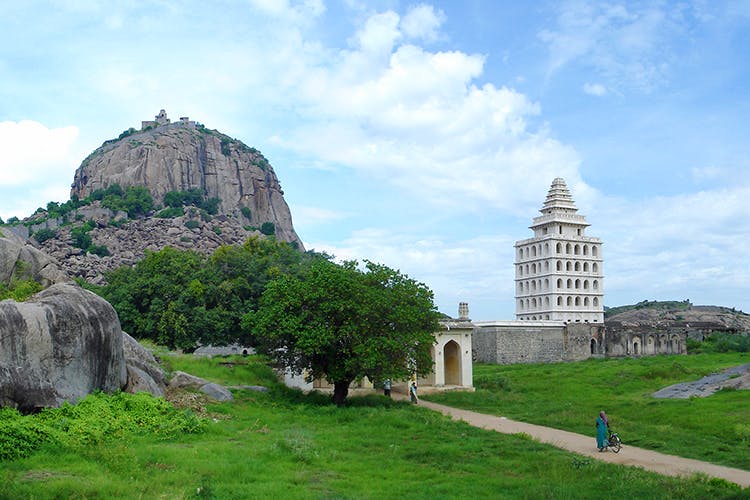
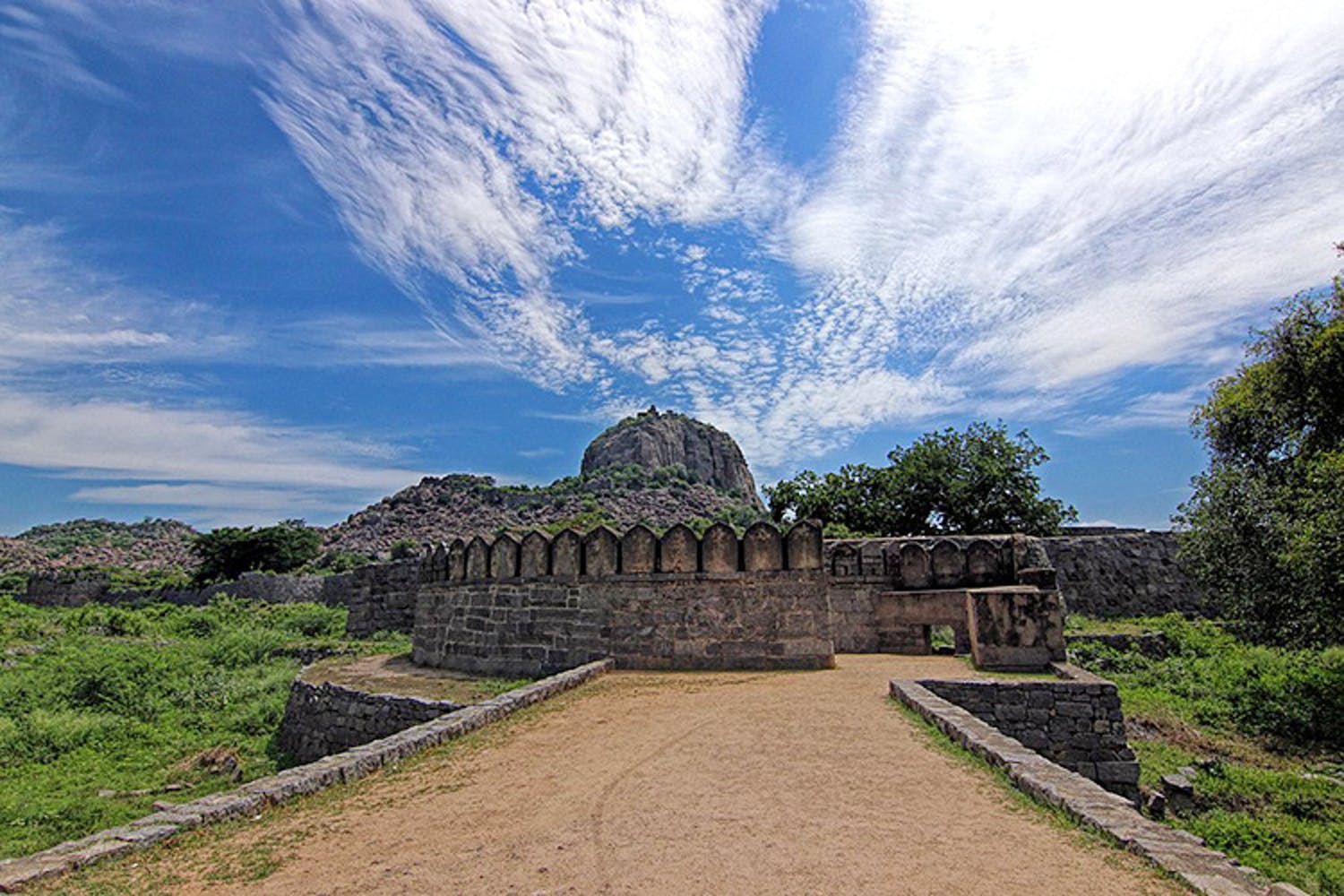
“Jabalpur” word is derived from Arabic ‘Jabi’ means rocky mountain on description of an impressive and awe inspiring rocky formation on the southern periphery of the city. Sage by the name Jabalie who was doing tapasya in this place and also Jabalpur has historical evidence that it was the capital of Tripuri Kingdom ruling Kalachuri dynasty and later on was captured to make it as the capital city in 875 AD and in a while the city was ruled by Haihai people in the eleventh century.

Taking the situations of the Gondawana location we get to know about the history of Jabalpur is quiet similar to that of Gondas, the one who are major leaders took the powers of the city into their hands during the period of 13th century. At the time the city Jabalpur was made capital of government wherein it was established by different rulers of Gondas. In 16th century, the Garha-Mandala Raja took the power of the city and later it was expanded to over 52 neighboring districts.

The Mughal emperors fought many times to capture the Gond but at last they succeeded after the death of Rani Durgavati, who was legendary queen who magnificently fought Mughal armies and sacrificed life in Mughal war.

Even powers of Mughal won the war still they never made the Gondas under their defeat and the kings of Gruha-Mandala individually sustained to rule. Still Gondas didn’t have any options to increase their power over Marathas and in the year 1781 they were under the power of Mughal. Immediately the region of their Kingdom which also incorporated Jabalpur city, it was approved to the kings of Bhonsle of Nagpur. Later the Marathas power began to collapse after the conquer against British forces and immediately Jabalpur came under the power of foreign rulers. Jabalpur made the main headquarters of Narmada region and cantonment was also established.

Till the independence of the country, Jabalpur was in under the control of British. At time of Colonial rule it was made capital of Saugar and Nerbudda region. British North Western Province and these regions were combined with the Central Provinces and Berar. In 1903 Jabalpur was transferred to military headquarters of the Southern Brigade. Jabalpur struggled for independence and introduced the Congress session of 1939, Subhash Chandra Bose was selected as President under the blessings of Mahatma Gandhi.  Kamania Gate was constructed in memory of that occasion.

After the independence, Jabalpur became one of its districts by combining the Central Provinces and Berar with state of Madhya Pradesh. The city started to take up developmental works of commercial, educational and even industrial department in order to improve the city with all basic amenities. At presently, Jabalpur has all sorts of infrastructural amenities such as domestic airport, judicial center of state along with state high court, Jabalpur University and the Jabalpur Municipal Corporation to present new outline to the city and Jabalpur is also well known for tourism.
 

About Udaipur (Udaipur History), Rajasthan

About Udaipur (History of Udaipur), Rajasthan

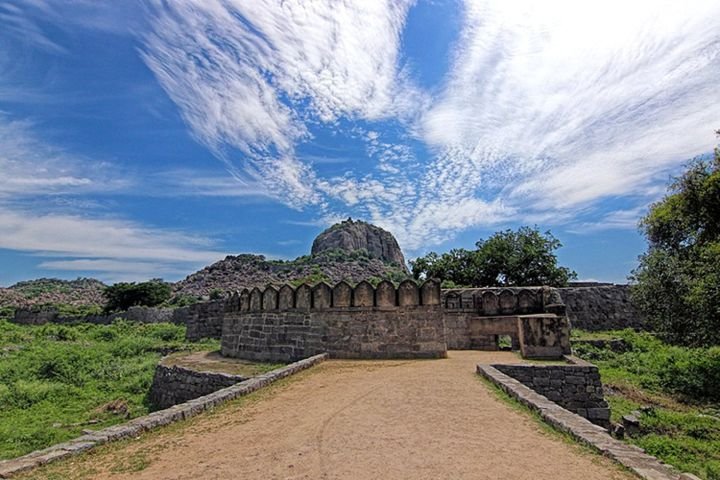
The city Udaipur is situation in Rajasthan state which was initiated by the Mewar ruler Maharana Udai Singh in year of 1559 AD, subsequent to his capital Chittorgarh was confined and shattered by the Mughal army. The foundation of the city has an interesting legend associated with it. When the king of Mughal Akbar overwhelmed the Rajput power and they handled power over the capital of Mewar territory Chittorgarh, as result to this Maharana Udai Singh was left no other choice than to surrender in the hills of Aravalis. According to it, Maharana Udai Singh, the founder, was hunting one day when he met a holy man meditating on a hill overlooking the Lake Pichhola and the holy man advised him to build a place at this favorably located spot with a fertile valley watered by the stream, a lake, an agreeable altitude and an amphitheater of low mountains which would serve as the new capital of the territory Mewar.


Therefore, the city of Udaipur came into survival posture the name of its founder, and given the heirs of Mewar territory with a capital which would stay intact by the Mughal army, their utmost enemy. Currently the city Udaipur is well known as the birthplace of Maharana Pratap, the supreme Rajput king and a passionate loyalist. The voyages of Maharana Pratap against the imperial army of King Akbar are memorable moments of Indian History. He confronted the strength of the royal power and sustained to do so until his final gasp, and therefore left us with a glorious story of supreme courage and myriad bearings.


The city Udaipur sustained to be as the capital city of the Mewar territory that was ruled by different emperors of the Sisodia tribe. The Sisodias of Mewar are alleged to be descended from the Lord Rama. It is saying that the intimates of Sisodia cam from the boundaries of Kashmir state and initiated many cities was with the coastal regions of the current Gujarat state, as soon as 2nd century BC. One among these cities was called as Vallabhai that was made-up to be bankrupt by the raiders in the time of 16th century. While the emperor of Vallabhai died, he left a son to be hoisted by a maidservant amidst the tribal aborigines of the Aravalis called as Bhils. The king was called Guhil by his mother, since he took birth in case as she was taking shelter in it. Guhil became a head of clan when he was brought up in his little age. The different tribes of Sisodia, Ranas and Rawals are considered to be the successors of Guhil.


The city Udaipur stayed a tough defender of Sisodia Ranas, and the efforts of the Mughal to bring under their overthrow not at all materialized. Later when the control of the Mughals begun to become paler, the Maharanas of Udaipur city enlarged their borders to recover their majority of mislaid kingdom of the previous Mewar territory. In year of 1818, this section of the country came under the authority of British emperors, Udaipur city became a region of the regal empire as a significant state. In 1947 independence of the India, this prince state Udaipur was combined with the state of Rajasthan and Udaipur city became the district of the state.

About Puri (History of Puri), Odisha, India

About Puri (History of Puri), India

The evidence to assist the primitive societies in regions which is currently known as Puri city is mostly the pebble equipments which have already composed from the façade. It is difficult for the historians to tell rather tangible regarding to the history of its previous period in anticipation of period when the Chinese wanderer and pilgrim Hiuen Tsang stayed in the area. The word ‘Che-lie-ta-lo’ got in this lists was recognized, while suspiciously, with the region enclosed by the current Puri, that was invented to be named by the name of ‘Charitra’ during that instance. During the 7th and 8th centuries, Puri had been a provincial outpost that linked eastern India with the South.

The city was at the tower of its magnificence when it becomes a significant position of Vaisnavism, after the building of the temple of Purusottama Jagannath by Chodaganga Deva.  He built a temple at Puri.

Soon after the city came to be named as Purusottama Kshetra, since we found proof of it from the Nagari Plate of Anangabhima III one who power the area under time of the older section of the 13th century. The Mughal and the Maratha submitted to Puri as Purusottama Chattar or easily Chhatar in their authorized lists that will once more reinforces the surmise of it already named by the name of Purusottama Kshetra under those instances. Afterwards, for the cause strange to us, it turns out to be Purusottama Puri, and by the similar indication, it came to be named as Puri. Earlier records prove that the territory was too known as Pooree. The truth which is the examples of ‘Pooree’ came frequently in the British lists provide adequate proof of it.

The Mughal profited power of the area encompassing the whole area Orissa state in the year of 1592 and separated it into three regions for revenue principles. These three sections named as circars by the Mughals, were Jaleswar, Kataka and Bahadra. The city Puri came below the hands of Kataka Circar. In the Mughal power from the year of 1751 to the year of 1803, Orissa state was partitioned into 5 Chakalas. An important section of Puri city became a region of The Pipli Chakala. Orissa state was mattered to another revolutionize when the British overhauled supremacy separations, with the river Mahanadi structuring the border among the both. On the other hand, this was not to be the ultimate form of the territory and shortly years observed various changes in the city.

In year of 1828 the city Puri considered as the District at the time when the entire of the territory was partitioned into the three districts, with Balaore and Cuttack being the other two. Until 1816, Puri remained the capital of Orissa, as well as the headquarters of the Collector. Historical facts about Puri reveal that Orissa was culled from Bihar in 1936 and created a sparate territory by the British. The region of the district of Puri enhanced essentially subsequent to the incorporation of the various feudatory states with the territory. The border of Puri sustained to reproduce alters done by the abilities also after the freedom of the country. The current modification happened in the year of 1995 when the district was crumbled to provide path to three new districts in the Orissa state and they are Nayagarh, Khurdha and Puri.


About Pondicherry (History of Pondicherry), India

About Pondicherry (History of Pondicherry)

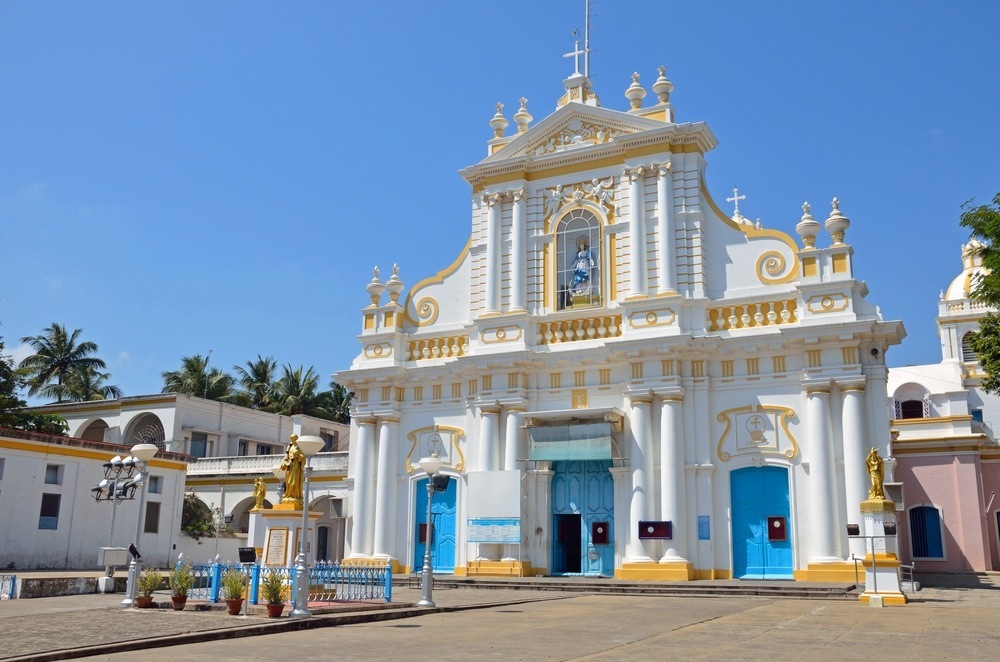
The Pondicherry is now called as Puducherry, which is a Union territory of India consisting of four different territories of three states of our country namely Tamil Nadu, Andhra Pradesh and Kerala.  The French people mainly ruled the Pondicherry and the very well arrangements of the roads to different areas of the territory and well structure of the Pondicherry city are still remaining as the proof of royal rule. Even though the Pondicherry was ruled by these royal rulers of French, which had made city of Pondicherry as the main portal region of the state of Tamil Nadu, the other rulers like Dutch, British, Danes and Portuguese were also ruled this city before the arrival of Europeans to this city.

pondicherry

While digging many proofs was found at Arikamedu, which explains the history of Pondicherry had started during the times of initial millennium.  At that time this city was in touch with Romans especially on business trades of colored cloth materials, ceramic and even valuable stones.

In continuation of Pondicherry history the Pallava Kingdom of Kanchipuram had occupied this region after the time of Romans in 4th century A.D after the time of Pallavas; the Pondicherry was under different dynasties from the Southern parts rulers up to the 10th century A.D.  Within the next entry by Pandya Kingdom in the 13-century A.D, the Pondicherry was ruled by for time being by Cholas of Tanjavur.  The origin of Vijayanagar Empire made its generations in the southern parts.  The Pondicherry has remained in Vijayanagar dynasty fold up to years 1638.  The Sultanas of Bijapur district has also ruled Pondicherry after the regime of Vijayanagar Empire.

pondicherry

At the time of discovery of sea route to India from Portuguese people, huge inflow of merchants from abroad countries have entered this place of Pondicherry for doing various trade businesses.

These people were decided to have the place in their fold in doing trade business and were different to the earlier merchants.  The Portuguese in Pondicherry had opened an industry, during 16th century and after many more factories have been established from the Europeans like Danes, Dutch and the French people.

By this time, the French people have engaged very much in trade business in Pondicherry and were the major ruling people than to others.  In 1673, the French were ruling Pondicherry without any disturbance and because of random clash primarily with Dutch people and soon after with the British people.  Then, the Dutch people were struggled to strengthen the Pondicherry with a four years time.  Meanwhile, the city had possessed once again by the French people in 1699 after a war with the Dutch people in the same century.  By that time they were put effort and changed the city of Pondicherry as a most recognition city by forming many extensions with pleasant architecture plans.

The further clashes between the French and English people observed some variations in the history of Pondicherry during the 18th century.  After the clashes, the French people were became dominant head of the area after a peace war with Europe and England countries.  The city gets its further growth that it had lost with the British people and recovered by the French people.  In the beginning of 1816, the city of Pondicherry was having good hold by the French people properly and the infrastructure developments to the city of Pondicherry were done along with the industries and educational institutions.

Around 1954, the so popular French people by missing the city of Pondicherry almost seven years after getting independence by the British ruling.  Then the city has become a union territory of our country and was controlled by Lt. Governor commissioned by then President of India.  The traces of French ruling was getting less recognition in the recent years, as the name of the old city Pondicherry has become new Puducherry.


scroll to top